
ELIZABETH GOOR
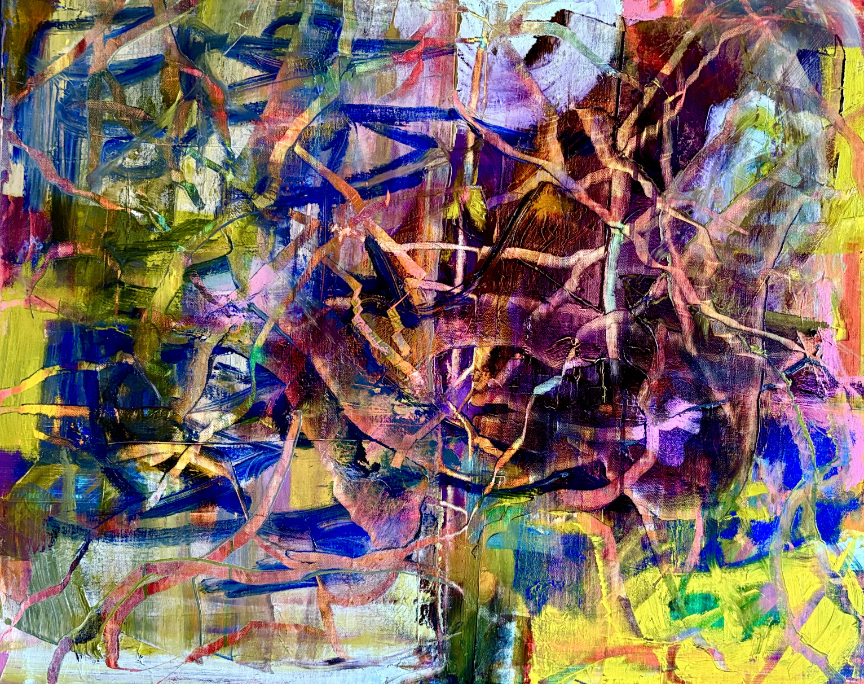
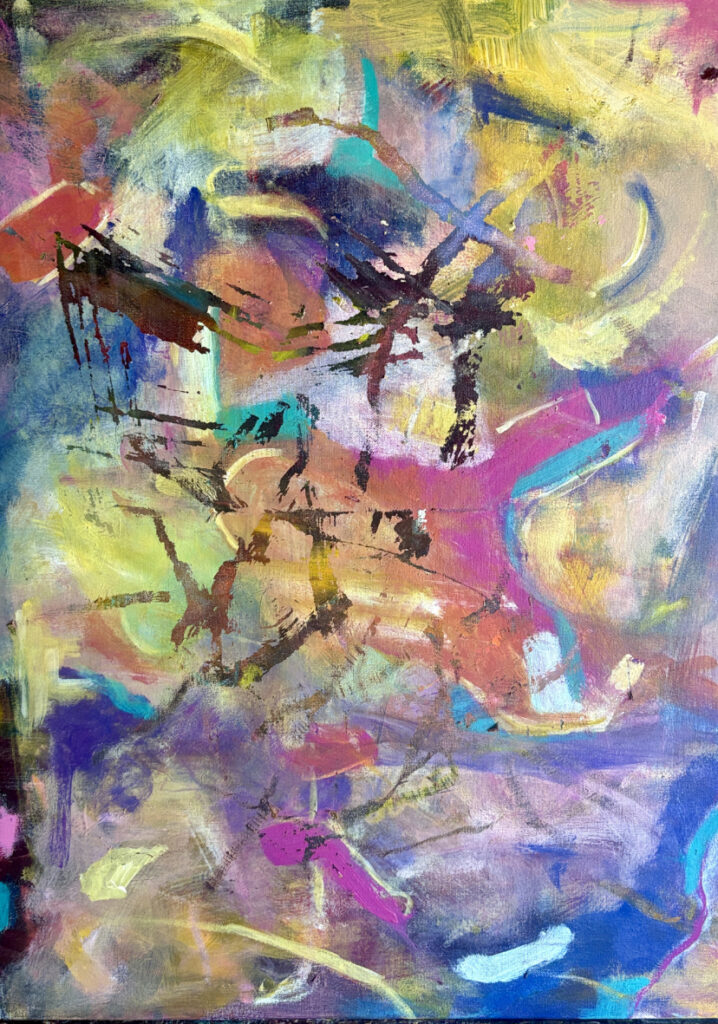
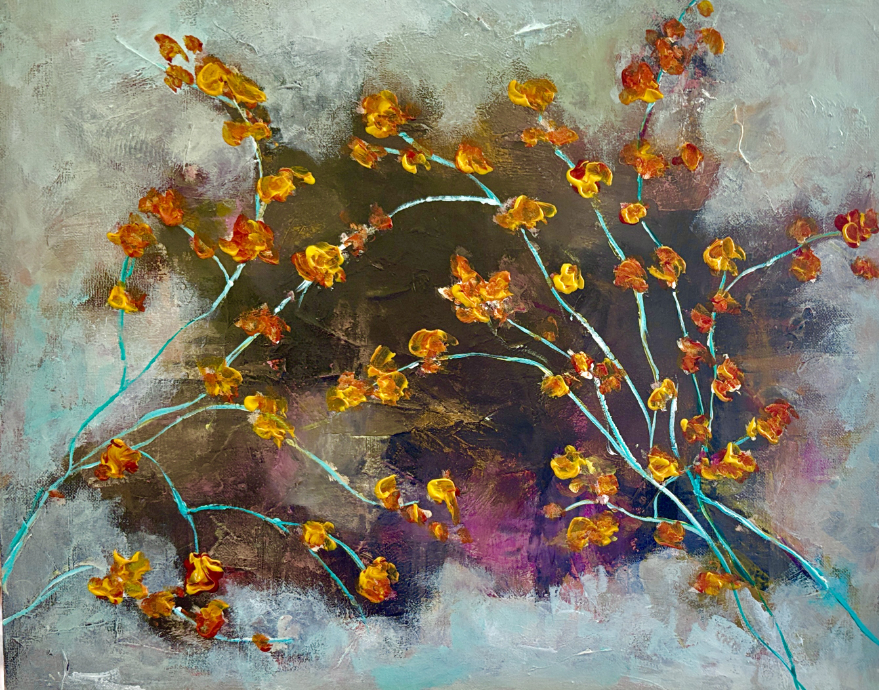
One of August’s two featured artists, Elizabeth Goor was born in Rome, Italy, and moved to the United States as a child. After retiring from a career in real estate, she began to immerse herself in painting. Her chosen medium is oil, which she believes provides texture, lushness, and the possibility of different illusions. Her use of colors dictates the ultimate mood of the painting—hot, vibrant colors for passion and excitement; muted tones for subtlety and restraint.
After years of creating representational paintings Goor shifted gears. She explains, “It’s only recently that I’ve fallen madly in love with abstract expressionism. The planning and thinking ahead have fallen by the wayside. Instead, I just let go and let my brush do the walking. Although, as you’ll find, I do paint florals and the occasional landscape. But they are abstracted and bear little resemblance to the subject matter.”
Goor believes that art is a language which needs no translation. She explains, “Those words portray quite well my feelings about art. To me, painting is the culmination of thoughts, emotions and soul-searching, with the results brought to life on canvas. Painting allows me the opportunity to expose as much, or as little, as I want about myself. My hope is that my work ignites a spark of curiosity in anyone seeing my art, propelling them to deepen their interest in the creative process.”
EDWARD OSLUND
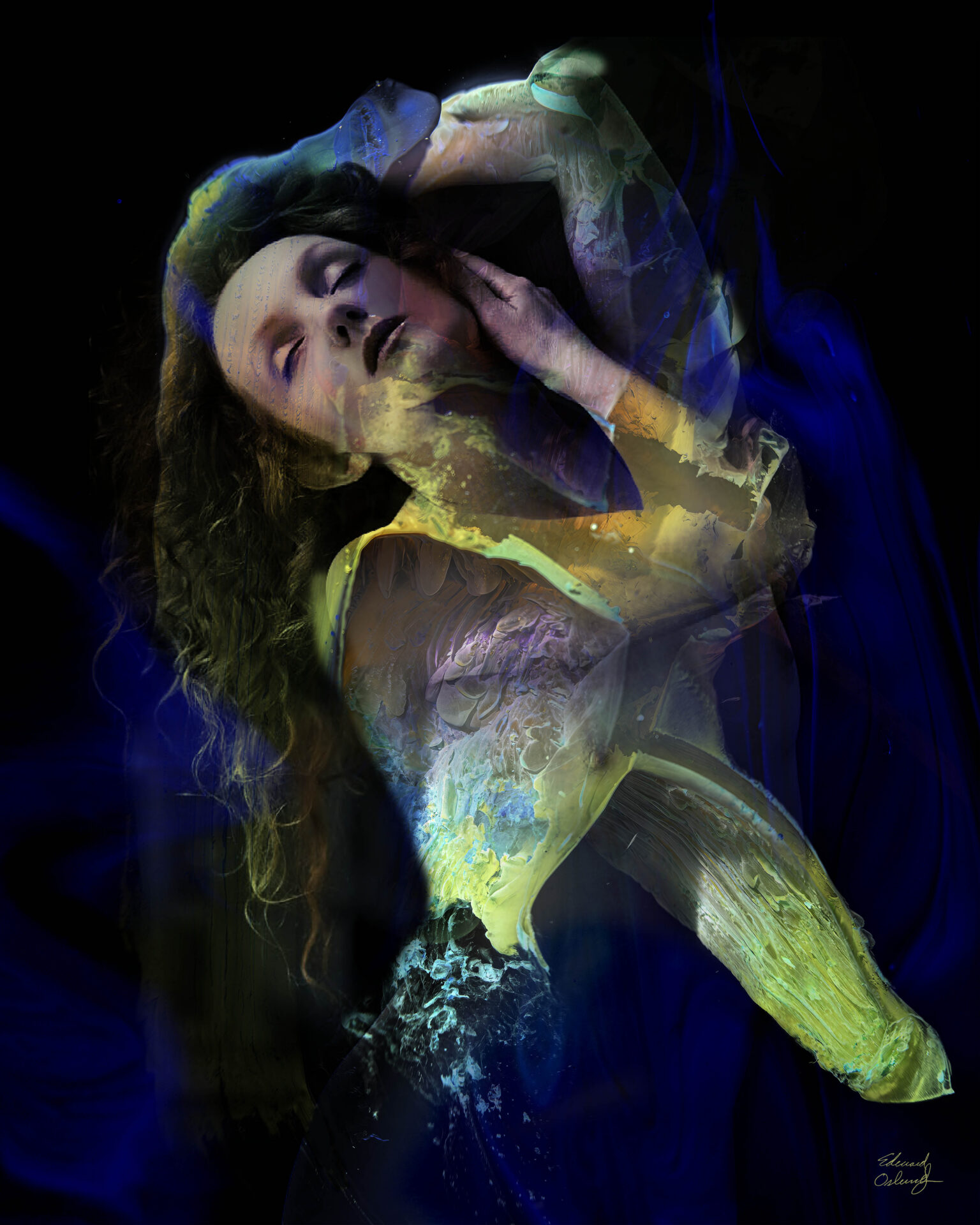
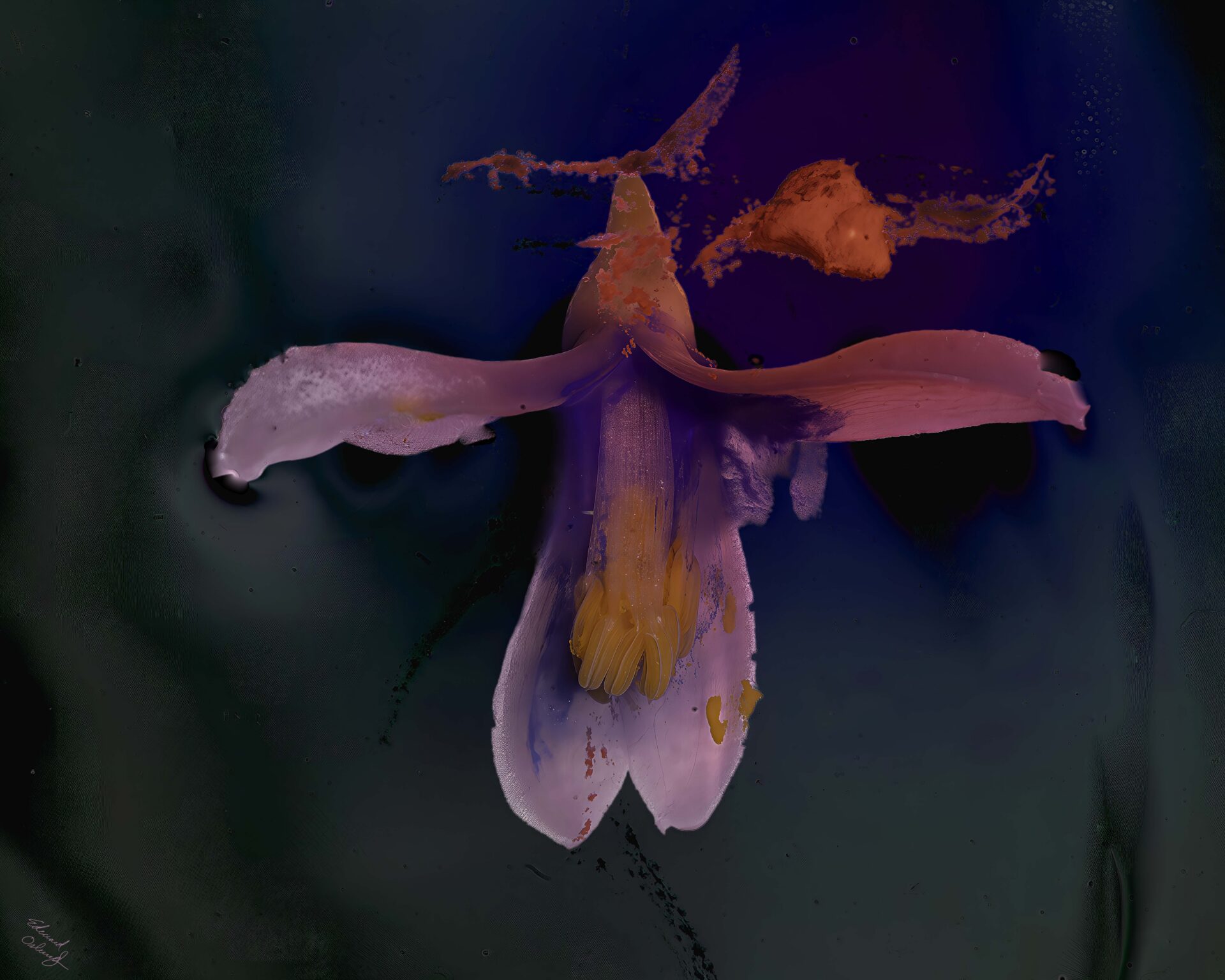
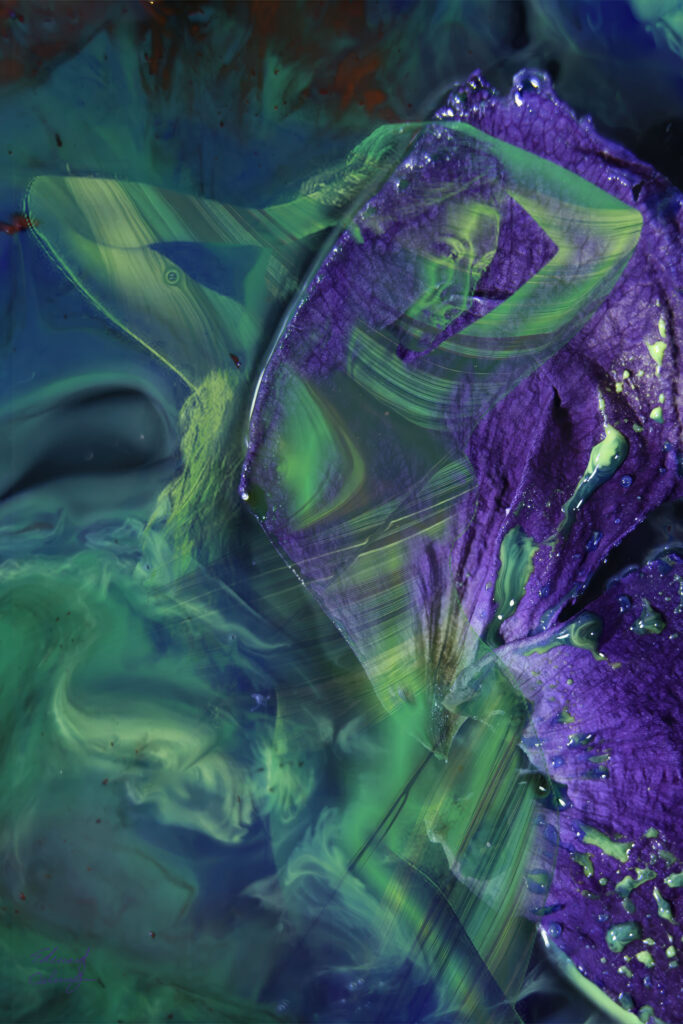
The second featured artist views himself not so much as a photographer, but as an abstract artist whose chosen medium is digital photography. Edward creates images which are not of something, but complete abstractions. He refers to the results as "Abstract Photography."
Oslund explains that his process is to create unique abstract images that are part painting and part photography with a large measure of creative imagination. He states, “The inspiration for my work started some twenty years ago, when I became fascinated with how nature created beauty by random processes called fractal mathematics. I started by photographing watercolors moving through water. This moves too fast for focusing a camera, which lead to using corn syrup and watercolors, followed by surgical gel, gelatin, and mineral oil. Over time my methods have moved from simply allowing nature’s process to unfold to something closer to painting in 3 dimensions.”
Oslund uses digital tools to refine his images, adjusting color and removing distractions or imperfections. He does not add elements through digital drawing; everything in each image comes from the camera. At times, hoever, he replaces or enhances the background to emphasize the subject or mood. In some works he creates composite images that combine his abstract photography with more traditional subjects, such as models, buildings, or flowers.